Omega-3 fatty acids from fish: why they matter

Do you also find it a challenge to eat fish every week? You’re certainly not alone. Only 30% of people in the Netherlands manage to meet this recommendation of the Dutch Health Council (1). That’s a pity, as fish is an important source of omega-3 fatty acids. In this blog you’ll read about the benefits of omega-3 fatty acids and how you can include them in your diet.
Why is fish important?
Fish is a key source of the omega-3 fatty acids EPA (eicosapentaenoic acid) and DHA (docosahexaenoic acid). Thes are often referred to as ‘fish fatty acids’. Your body can only produce these fatty acids in limited amounts, which is why it’s important to obtain them through your diet.
The functions of omega-3 fatty acids
EPA and DHA are involved in several processes in the body. The best-known effect is their positive influence on heart function, with a daily intake of 250 mg EPA and DHA.
In addition, DHA plays a role in several other functions in the body. A daily intake of 250 mg DHA:
- contributes to normal brain function. DHA is an important structural component of the brain.
- helps maintain normal vision.
How to include omega-3 fatty acids in your diet
The Dutch Health Council advises adults to consume an average of 200 mg omega-3 fatty acids from fish per day. One portion of oily fish contains around seven times this amount. That’s why the recommendation is to eat fish once a week, preferably oily fish (2). Examples include:
- Salmon
- Herring
- Sardines
- Trout
Don’t manage to eat fish every week? An omega-3 supplement can be a convenient alternative.
Krill Omega-3 Gold is a fixed part of my routine. It supports important body functions and I can use it with confidence because all Virtuoos products are NZVT-tested.
Marrit Steenbergen
Swimmer
Tip: Krill Omega-3 Gold is a favourite supplement of top swimmer Marrit Steenbergen. Read more about Marrit here.
Omega-3 supplements
Perhaps you don’t like fish, you’re allergic, or for another reason you don’t manage to eat it every week. In that case, an omega-3 supplement can be a practical addition. It provides a concentrated source of EPA and DHA, making it an easy way to add these fatty acids to your diet.
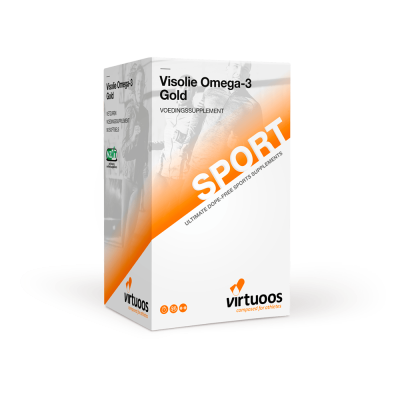
At Virtuoos we offer two supplements with omega-3 fatty acids: Fish Oil Omega-3 Gold and Krill Omega-3 Gold. Below you’ll find the key benefits and differences.
Fish Oil Omega-3 Gold
Fish Oil Omega-3 Gold provides omega-3 fatty acids from sustainable fisheries, certified with the Friend of the Sea label. Each daily serving delivers 550 mg of fish fatty acids, including 330 mg EPA and 220 mg DHA. Vitamin E has been added to help protect the oil against oxidation.
- 330 mg EPA and 220 mg DHA per daily serving
- With Friend of the Sea certification
- With added vitamin E
- 90 convenient softgels per packaging
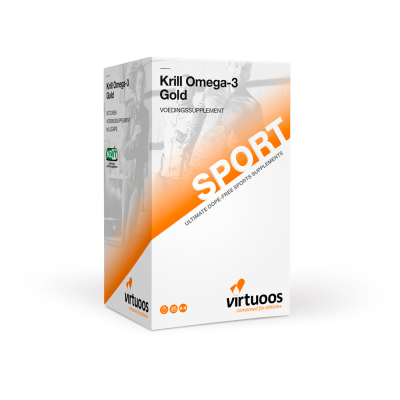
Krill Omega-3 Gold
Krill Omega-3 Gold is sourced from sustainable Antarctic krill, a small shrimp-like crustacean rich in omega-3 fatty acids. A key difference compared with fish oil is that the omega-3 fatty acids in krill oil are naturally bound to phospholipids, a form that is easily absorbed by the body.
- 177 mg EPA and 82 mg DHA per daily serving
- Omega-3 fatty acids in a highly absorbable phospholipid form
- Harvested using sustainable Eco-Harvesting® technology
- With MSC certification
Are you ready to add an omega-3 supplement to your routine? Discover our omega-3 products here.
Sources:
- RIVM. (2023). Voedselconsumptiepeiling 2019–2021: Vis en visvetzuren. Accessed 15 September 2025, from https://wateetnederland.nl/resultaten/voedingsmiddelen/richtlijnen/vis-en-visvetzuren
- Gezondheidsraad. Richtlijnen goede voeding 2015. The Hague: Gezondheidsraad, 2015; publication no. 2015/24.