How Team Novus prepares for the most important moment of the season
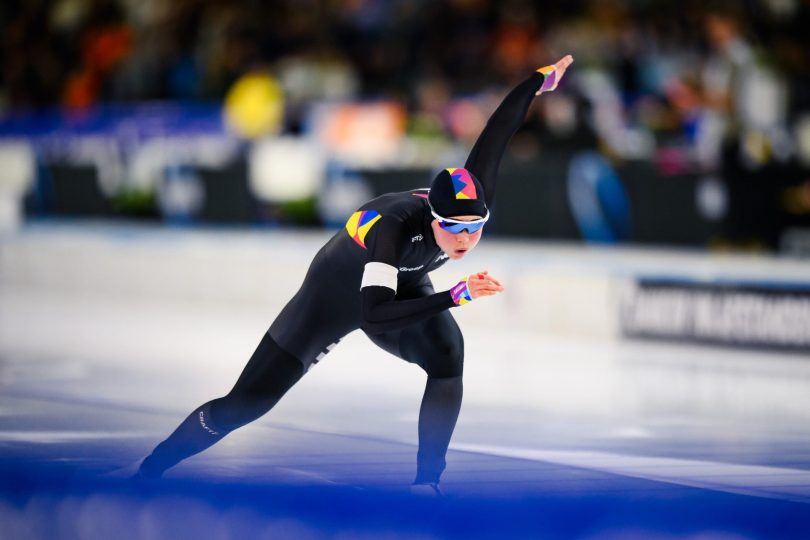
With the most important competition of the season approaching, everything comes together within Team Novus. Performance coach Michel Butter gives an insight into this phase of the season and explains how he works together with the staff and athletes towards the best possible preparation.
1. Looking at this phase of the season, what are the main focus points for the team right now?
“We are now really close to the most important competition of the year, about three weeks to go. That means we are in a very specific phase. We are gradually reducing training volume, while the focus is mainly on very specific training sessions and competitions.
After the World Cup in Inzell, we still had a few targeted training sessions, but since then we have really entered what we call the fine tuning phase. Fine tuning towards the competition specific distances. That means training very precisely, while at the same time allowing athletes to feel increasingly fresh and well rested.
In addition, it is important for us that the atmosphere during this period is right. Of course there is tension, that comes with it, but we mainly want this to be an enjoyable phase. For many athletes this is a period they have been working towards for a long time. As a team, you want a positive vibe and a good overall feeling.
Not everyone within Team Novus has qualified for this major competition. Some athletes are focusing on other goals, such as the Dutch Sprint Championships or the World Sprint or Allround Championships in Heerenveen on 8 March. At the same time, they also play an important role in supporting their teammates during this period.”
2. As a performance coach, how do you ensure that athletes stay fit and resilient towards important competitions?
“I think it is important to distinguish between different phases. In the final phase towards important competitions, it is no longer about becoming fit and resilient, but mainly about feeling fitter and more rested. The major training stimuli have already been applied by then. In the fine tuning phase we are in now, you expect athletes to feel increasingly fresh, and therefore also able to tolerate training well.
If we look a bit further back in the season, roughly from nine to three weeks before the competition, that is the phase where additional training load is still being built. For example around Christmas and New Year. During that period, we deliberately added extra training hours, often on the bike. Some athletes also went abroad for this, for example to Spain.
The most important thing in keeping athletes fit and resilient is continuously monitoring how they respond to training. That is very individual. As coaches, we apply a certain training stimulus and have an expectation of how someone should respond and recover. We then assess this on a micro level, day by day, but also over slightly longer periods, such as ten to fourteen days, to see whether the response matches our expectations.
It is not just about what you put into the body, but mainly about how the body responds. That is what we call training adaptation. Recovery plays a major role in this. We look at factors such as sleep and nutrition, but also at data like HRV and resting heart rate.
We always combine that data with feedback from the athletes themselves. How do you feel when you wake up? How do you feel during and after training? All of these signals together give us insight into whether training is having the desired effect and whether someone remains fit and resilient enough to handle the next stimulus. Ultimately, it is not about one single training session, but about all the sessions that follow.”
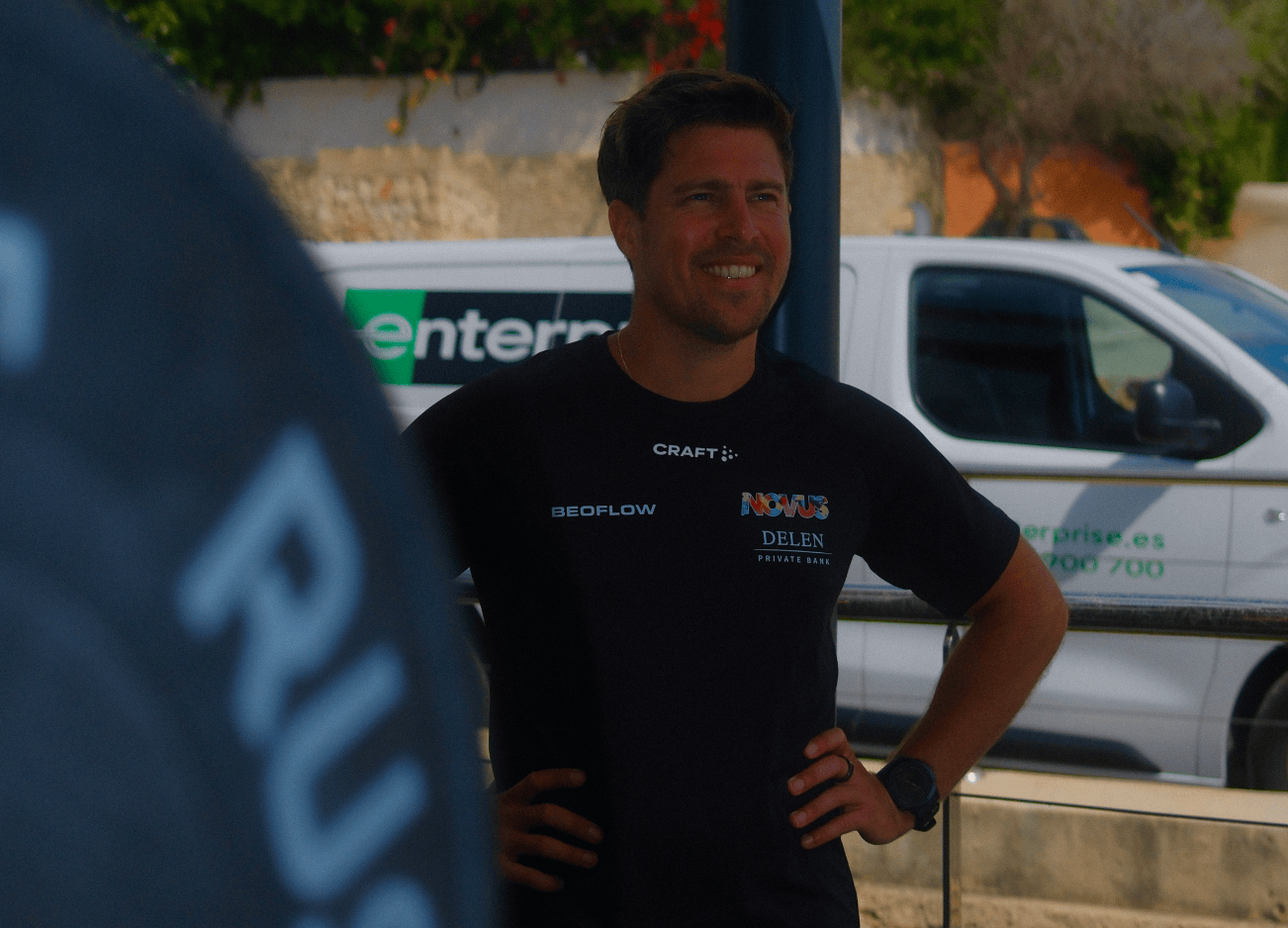
3. Within Team Novus, you work with several specialists, including a nutritionist. How does this collaboration work and how important is it?
“That is correct. Within Team Novus we work with a whole network of experts. From exercise physiologists and physiotherapists to a sports doctor, and indeed also a nutritionist. That is Bo van der Werff. This collaboration is very important to us.
Nutrition plays a major role, because it is one of the factors that ultimately determines how well training takes effect. Nutrition is fuel, it provides energy. It is important that athletes consume high quality nutrition, but also that the quantities are properly aligned with what they expend during training. That is essentially about balancing energy intake and energy expenditure.
If you know how much energy a training session requires, you can tailor nutrition accordingly. This is essential not only for training quality, but also for recovery afterwards.
Bo closely monitors all of these factors. She works intensively with the athletes, and as a staff we also have regular structured meetings with her. In principle, we have an in depth discussion every two weeks to review how everything is going. And if something comes up in between, we are in direct contact.
For example, if an athlete feels less fit, we may need to assess, in consultation with the sports doctor, what adjustments are needed in terms of nutrition or supplementation. These short communication lines are very important to us. Just like with all other specialists, we work in a structured way, and if an intervention is needed, we act quickly.”
The most important thing in continuing to improve and make progress is consistency in training. Anything that disrupts that consistency needs to be minimised.
Michel Butter
Performance coach at Team Novus
4. How do you view the role of nutrition and supplements within the Team Novus approach, and what do they add towards important competitions?
“Around training, nutrition and supplementation play a very important role. They help keep athletes fit, but also allow us to act quickly and accurately if something arises. For example, if there are signals that someone is not responding optimally, we can make targeted adjustments in nutrition and supplementation, also from a preventive perspective.
The most important thing in continuing to improve and make progress is consistency in training. Anything that disrupts that consistency needs to be minimised. Nutrition and supplementation therefore need to be of a high quality. You want to avoid illness, injury or under fuelling. This is just as relevant in the training phase leading into important competitions.
In addition, nutrition and supplementation also play a role around competitions themselves. That is where performance comes into play. In that phase, we apply specific nutritional strategies and supplements to ensure that everything is optimally aligned on competition day, allowing athletes to perform at their best.”
5. Looking back on the season so far, how satisfied are you with where the team stands, and what are you most proud of as a performance coach?
“I actually like to look a bit further back than just this season. For me, it is more about the entire trajectory of the past four years and where we now stand as a team.
First and foremost, I am very proud that as an international team we have been able to complete a full development trajectory and are now here together. This started several years ago with an idea and a small group of athletes. In the beginning, there was essentially nothing. From there, we gradually built a professional environment step by step.
We created a structure that is truly high performance, while at the same time being a pleasant and enjoyable environment. That is very important to me. It is about giving talent the opportunity to develop in the best possible setting. Over time, specialists were added, such as a sports doctor, physiotherapists and a nutritionist. The way we collaborate, our communication lines and how closely we work with the athletes have all been crucial elements in this process.
This is particularly challenging in an international team, where athletes are often also connected to different national federations. That makes me even more proud that we have managed to organise this so well.
This environment then provides the framework for development. Some athletes are able to make rapid progress within it, while others need more time. Everyone follows their own path. As a staff, we can create the right conditions, but ultimately each individual has to determine whether they are satisfied with their own development.
What I am also personally very proud of is that every skater who has been part of Team Novus, whether from the very beginning or joining later from other teams, has taken steps forward. For some, that means reaching the very highest level, for others just missing out. And sometimes that level may not have been realistic in the first place. But one thing is consistent: every athlete has made progress and developed further.
That is something we can truly be proud of as a team. We have been there to facilitate that development as well as possible, and I believe we have done that in a very strong way.”