Britt Lambrecht on routines at Lotto-Intermarché and the use of beetroot juice
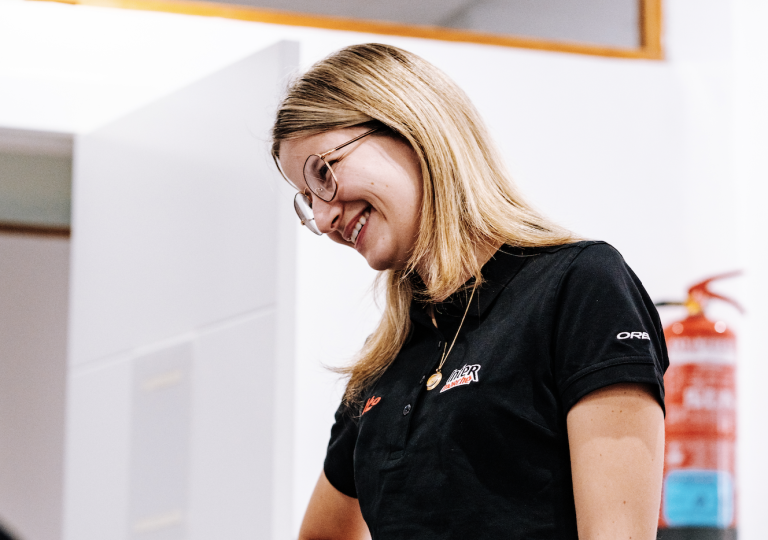
The cycling season is in full swing, and behind every top performance lies a well-thought-out approach. Within Lotto-Intermarché, nutrition plays a key role in this, with clear routines and smart strategies. From beetroot shots to recovery: every detail counts. We spoke with Britt Lambrecht, Head of Nutrition, about her approach and insights. Curious how nutrition makes the difference at the top level?
Has your role within the team changed after the team merger?
“My role within the team has remained the same. There have been a number of changes within the team’s staff. As a result, it takes some getting used to a slightly different way of working, but I am satisfied with how Team Nutrition collaborates with Louise and Jemme as fellow dietitians. Additionally, we have 3 chefs on the team with whom we enjoy a wonderful collaboration.”
How do you collaborate with other staff members (coach, physio, team management) to align nutrition strategies?
“As Head of Nutrition, I work closely with the entire performance staff as well as soigneurs and bus drivers. Most of the contact is with doctors and coaches.
With the coach, we mainly discuss the riders’ goals and the necessary supplements linked to these goals. With doctors, we discuss recovery and any supplement intake.”
To what extent does the vision of Virtuoos align with your team’s nutrition philosophy?
“The vision of Virtuoos and our team nutrition approach is, in my opinion, 100% aligned. We both aim for an evidence-based approach with the goal of achieving the best possible performance for our riders. Everything is scientifically supported, and we strive to use the newest and best products.
Another major advantage is the practical applicability in sports, such as great taste, correct dosages, and a doping-free label on all products.”
“We both aim for an evidence-based approach with the goal of achieving the best possible performance.”
Britt Lambrecht
Head of Nutrition bij Lotto-Intermarché
How do you involve riders in the process?
“As a sports dietitian, it is crucial that riders not only follow guidelines but also understand why they need to do certain things. That’s why I work in an interactive and individual way. Education and awareness are key: I explain why we make certain choices. We have regular one-on-one conversations where riders can ask anything. Open communication is central to our way of working. Together with the riders, we discuss strategies and explain our decisions.”
Are there fixed routines the team adheres to regarding nutrition and supplementation before, during, and after a Belgian classic?
“Within the team, we work with clear, recurring routines before, during, and after a classic. This ensures consistency, predictability, and optimal performance under tough conditions (cold, rain, cobblestones, a long and hard race)”
Which supplements are used for a Belgian classic? As a standard routine?
“Supplements we administer daily during a Belgian classic are vitamin D and omega 3. We have vitamin D levels checked regularly in the blood. We very often see deficiencies there between October and April. Vitamin D is extremely important for bone health and is involved in muscle contraction. We administer omega 3 because we cannot obtain enough of it from the riders’ basic diet. Omega 3 has an anti-inflammatory effect.
Leading up to a classic, we also work with beta-alanine, which we build up in the weeks leading up to the race.”
Which supplements do you specifically use for performance during a Belgian classic?
“For a Belgian classic, we always focus on caffeine. In terms of dosage, we are between 3 and 6 mg per kilogram of body weight. Caffeine helps to stay alert and sharp and reduces the feeling of fatigue during exertion*.
In addition, we use a beetroot shot. We administer this daily for 2 to 3 days prior to the race, with a final intake 2 to 3 hours before the start.
Sodium bicarbonate is also a supplement that we now use as standard during Belgian classics. During these races, long periods of exertion and short, intense moments constantly alternate.”
*Health claims awaiting European approval. Beneficial effects are achieved with a minimum intake of 75 mg of caffeine.
Which supplements do you use to promote the riders’ recovery immediately after a race?
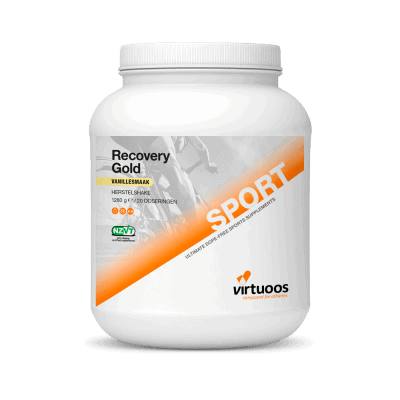
“After the race, we start with the Virtuoos recovery shake, and subsequently we also administer antioxidants to prevent illness and promote recovery. We administer vitamin C and zinc as standard after every race.”
“Within the team, we work with clear, recurring routines before, during, and after a classic. This ensures consistency, predictability, and optimal performance under demanding conditions.”
Britt Lambrecht
Head of Nutrition bij Lotto-Intermarché
In your opinion, what is the most important development in the field of nutrition in recent years?
“I am now in my fourth year as a sports dietitian at Lotto, and over the years we have seen that nutrition is only becoming more important. Nutrition is truly tailored completely to each rider, particularly regarding carbohydrate intake during exertion, which changes enormously every year. There is also more focus on the timing of recovery and the right supplements.”
Recovery has also become increasingly important in recent years; how do you continue to optimize this?
- “Quick post-exercise fueling (within 30 minutes),
- Sufficient carbohydrates for glycogen replenishment
- Adequate protein (1.6–2.2 g/kg/day)
- Hydration and electrolytes
- Combined with sleep, training load, and injury prevention.”
“After every training session, they must first take either a whey shake or a recovery shake. Before a competition, this is supplemented with cherry juice (100mg anthocyanins). This is followed by a recovery meal based on carbohydrates and proteins, and replenishing sufficient fluids.”
Are there any other interesting developments you would like to mention?
“The biggest development currently lies in carbohydrate intake during a competition; we are currently at 120g carbs/hour, but this is moving towards 150g carbs/hour for triathletes as well, so these developments are very interesting to follow. Monitoring technology is also advancing further and further.”
What is your opinion on the use of the performance product – nitrate shot / colloquially known as beet shot?
The use of a beetroot shot can be an interesting strategy, provided it is targeted and deployed at the right moment. Beetroot juice contains nitrate, which is converted into nitric oxide in the body.
It is primarily used in races with a high tempo and a varied course, such as classics or stages with many short bursts of effort and repeated accelerations.
“As Head of Nutrition at Lotto-Intermarché, we always look for the combination of science, practical applicability, and safety. With Virtuoos’ Beetroot Shot Gold, we have a product that fits well into our race preparation. Additionally, the product has been tested for the absence of doping-related substances. This is essential to us and speaks volumes about the quality of the product. We are proud of the collaboration with Virtuoos and that we can utilize their product development.”
Britt Lambrecht
Head of Nutrition bij Lotto-Intermarché
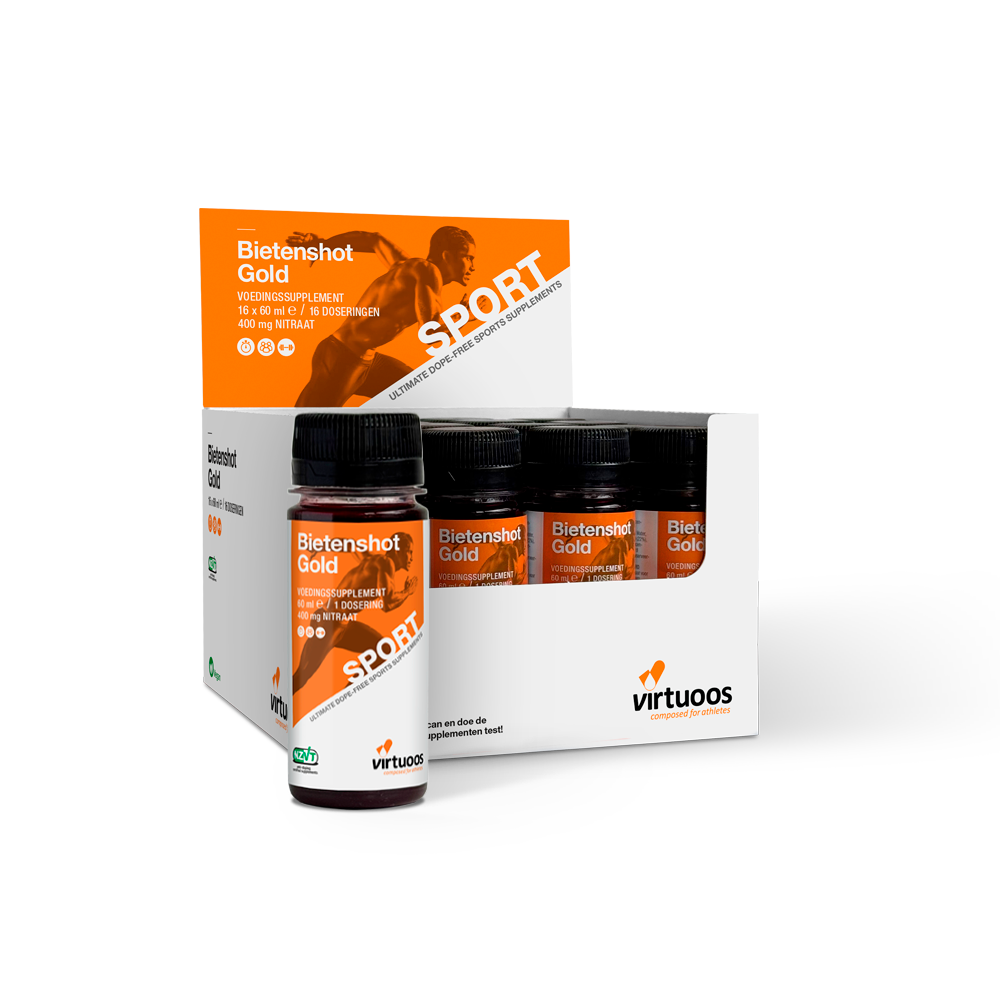
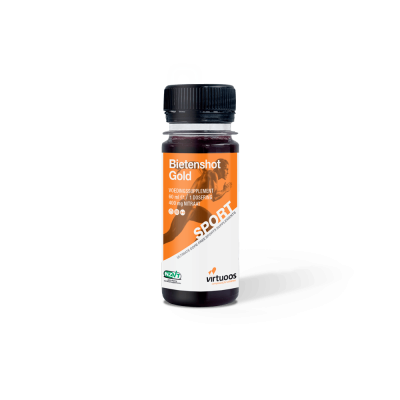
Beet Shot Gold
Beet Shot Gold is concentrated red beet juice in a convenient shot, specially developed for athletes. One shot provides 400 mg of red beet nitrate, comparable to about 150 to 200 grams of cooked beets.
The beet shot has a natural, slightly sweet red beet flavor. The small bottles are easy to carry in your gym bag and ideal for use in the run-up to intensive training sessions and competitions.
Do you have a favorite recipe that you would like to share with us?
“My favorite recovery meal for the riders is the salmon poke bowl. This can be used in a classic race but also in a stage race. It is also very simple to make.”
Ingredients:
- 100–120 g uncooked rice (or sushi rice)
- 120–150 g fresh salmon (raw or lightly fried)
- ½ avocado
- 100 g mango
- 1 handful cucumber (diced)
- 1 handful carrot (grated)
- 1 handful edamame
- 1 tablespoon soy sauce
- 1 teaspoon sesame oil
How do you prepare it?
- Cook the rice and let it cool slightly
- Cut the salmon into cubes (or fry briefly if desired)
- Cut the vegetables and avocado
- Place everything in a bowl (rice as the base)
- Finish with soy sauce + sesame oil + toppings
Why do you think this dish is ideal for athletes?
It ensures rapid glycogen replenishment thanks to the rice. High-quality protein and omega-3 from the portion of salmon. Rich in micronutrients with vegetables, fruit, and avocado. It also looks like a beautiful coloring book, which is always pleasant for the riders ;)”
Now that the nice weather is coming, more and more amateur cyclists are getting on their bikes. What would you advise?
“When the weather improves and riders start cycling more and for longer again, it is crucial to pay attention to sufficient energy intake and hydration. Many amateurs underestimate this, which leads to fatigue and a loss of performance.
Focus on sufficient carbohydrates before the ride and good hydration.
Also ensure that you consume enough carbohydrates during the ride. Recovery is also very important after the ride; a whey shake or recovery shake is certainly ideal for amateur cyclists in this regard.
It is also often advisable to have a blood test after the winter to check for any deficiencies and to determine if supplements should potentially be started.”