The difference between Whey and Casein proteins

Whey and casein proteins may appear similar, but each has its own unique properties and is obtained in a different way. Whey is absorbed quickly, making it ideal after exercise. Casein, on the other hand, is digested slowly and is therefore perfect before bedtime. In this blog, you will learn more about the differences between whey and casein proteins and how protein powder is made.
Proteins in milk
Milk naturally contains a high amount of protein, mainly whey protein and casein protein. Around 80% of the proteins in milk are casein and the remaining 20% are whey. The quality of these milk proteins is high: they are well absorbed by the body and have an amino acid profile that closely matches our needs. This makes them particularly suitable for athletes. Whey and casein proteins are produced in different ways and have different effects in the body. That is why separate protein powders exist with either whey or casein.
How are whey and casein protein powders made?
In the past, whey protein was merely a by-product of cheese production, while casein remained in the cheese. Little use was made of whey. Since it was discovered that whey proteins are of high quality, they have become widely used by athletes to support muscle recovery after exercise and the development of muscle mass. You can read more about this under the heading “How to use whey and casein protein.”
Production from fresh milk
Whey proteins can also be obtained directly from fresh milk. This method of production results in a purer whey protein with a higher leucine content. The leucine content in “milk whey” is 10–15% higher than in whey proteins derived from cheese production. As leucine is the most important amino acid for supporting muscle recovery and growth, these milk whey proteins are particularly interesting for dedicated athletes.
To produce whey and casein protein powders, milk is first pasteurised (72 °C) and then skimmed, leaving skimmed milk. This milk is split into two protein fractions: about 80% casein proteins and 20% whey proteins. The whey proteins are then filtered and dried into a high-quality protein powder.
Casein protein production takes place from the casein fraction of the split milk and can be done in two ways:
- Acidification and neutralisation with calcium: the milk is first acidified and then neutralised with calcium. This process produces an almost pure form of casein, with a casein-to-whey ratio of 99:1 and a very low lactose content (<0.2%). This is called caseinate.
- Microfiltration: the milk is filtered, resulting in a casein-to-whey ratio of 98:2 and a lactose content of about 5%. During this process, the natural micelle structure of the casein is preserved. The casein produced in this way is called micellar casein.
Thanks to the preserved micelle structure, micellar casein is digested and absorbed even more slowly. For this reason, athletes often prefer this variant.
How to use whey and casein protein
Whey Proteins
Whey proteins offer several unique advantages. First of all, they have a high-quality amino acid composition with a high leucine content, which closely matches what your muscles need for recovery and growth. In addition, whey proteins are digested and absorbed quickly, making them ideal to use after training or competition.
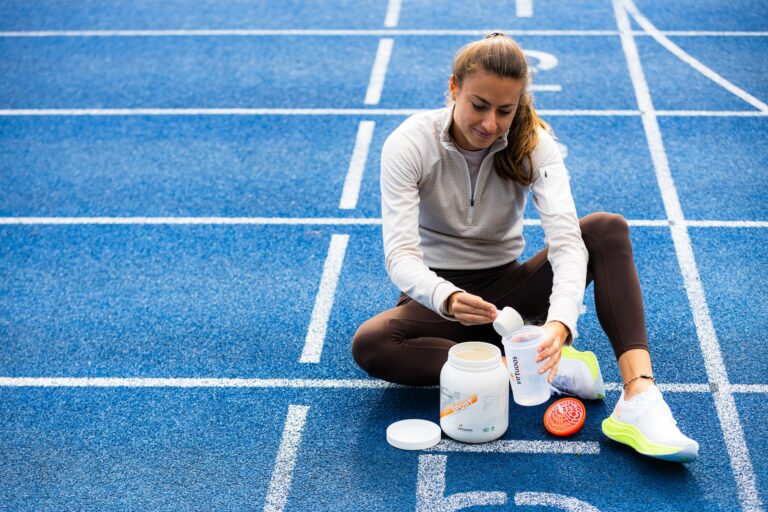
Whey protein powder is also a practical choice at other times when you want to increase your protein intake. It dissolves easily in water or (plant-based) milk using a shaker, and can also be added to smoothies, yoghurt or porridge.
Benefits of whey proteins:
- High-quality amino acid profile (rich in leucine)
- Rapid absorption
- Ideal after training or competition
- Easy to dissolve
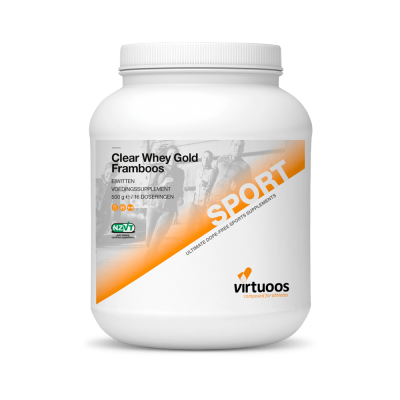
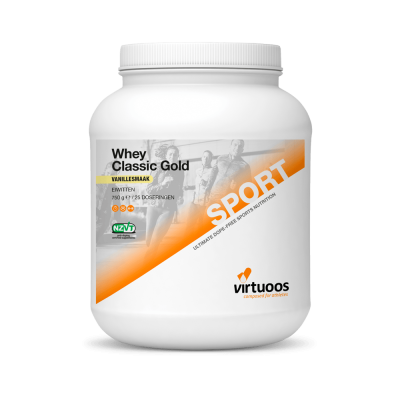
Tip: Try Whey Classic Gold or Clear Whey Gold to support muscle recovery after exercise.
Casein proteins
Unlike fast-digesting whey, casein proteins are digested and absorbed slowly. This is because casein tends to clump together in the stomach. After exercise, a whey shake is preferred, but casein is ideal when you will not be consuming protein for an extended period. Many athletes therefore take a casein shake before bedtime, providing their muscles with a steady supply of amino acids throughout the night. The best time for a casein shake is about 30–60 minutes before going to bed.
Casein shakes have a thicker, creamier texture compared to whey. Casein powder dissolves easily in water or (plant-based) milk with a shaker. When prepared with milk, the shake becomes even creamier than with water.
Benefits of casein proteins:
- Slow digestion and absorption
- Ideal before bedtime
- Easy to dissolve
- Creamy texture
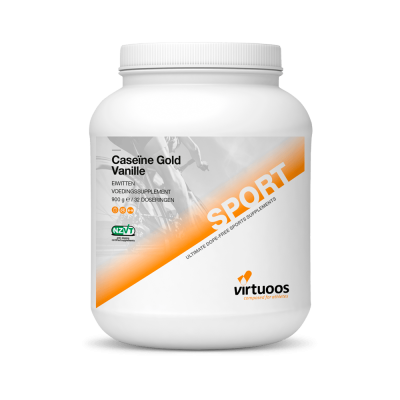
Tip: Casein Gold contains micellar casein, making it ideal to take before bedtime.