Bo van der Werff on nutrition and supplements at Team Novus
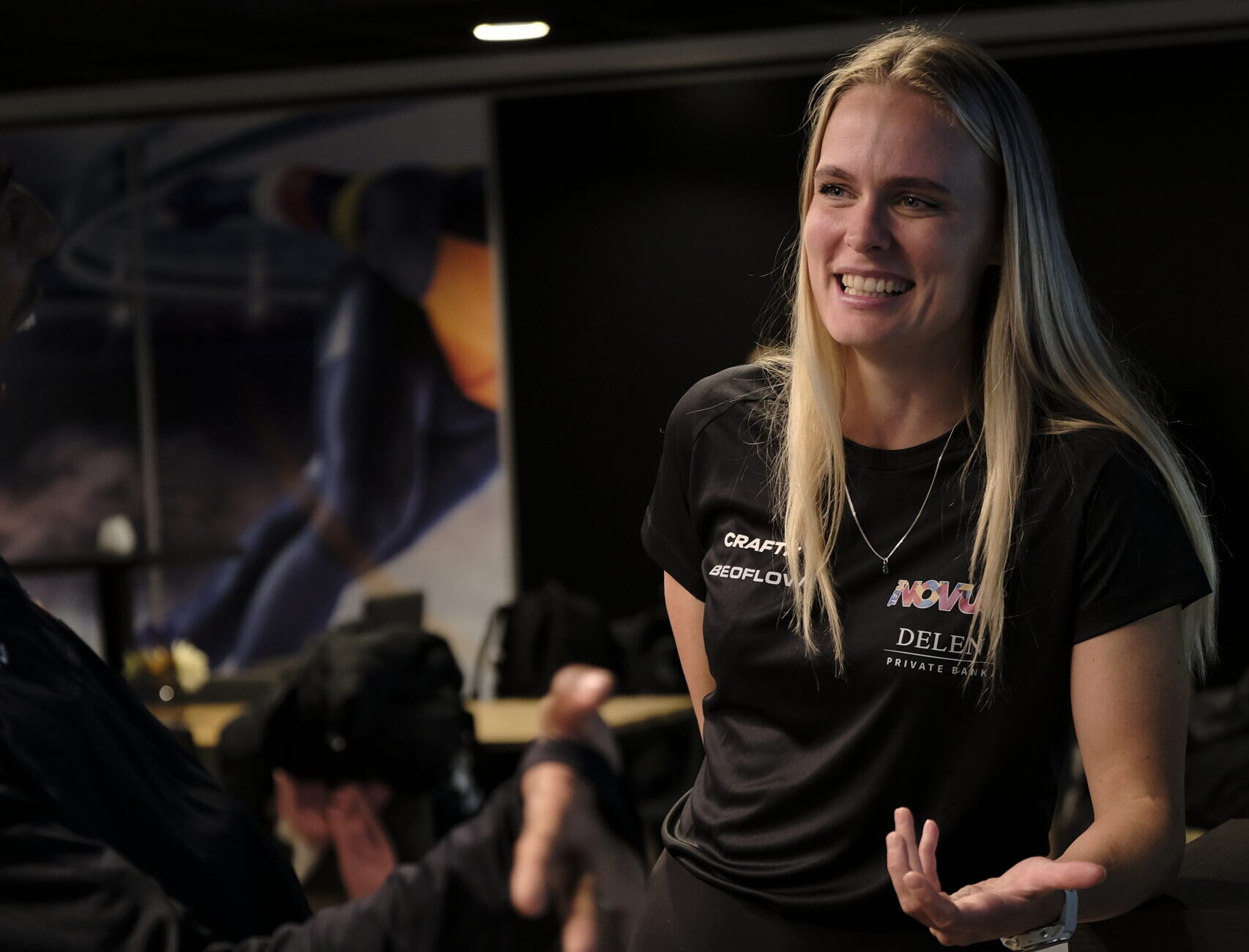
Nutrition, recovery and personal guidance play an important role in top sport. Bo van der Werff, nutritionist at Team Novus, explains how the nutritional strategy has developed in recent years, what role supplements play and what her expectations are for the new skating season.
1. Looking back at the past few years with Team Novus, what developments have taken place in terms of nutrition and guidance? What do you do differently now compared to when you first started?
At Team Novus, we are always looking for innovation and new ideas. In the world of nutrition and supplements, things never stand still. It is therefore crucial to stay up to date with the latest research and, more importantly, to carefully evaluate what is and isn’t relevant for speed skaters.
Over the last few years, we have seen significant progress in the areas of nutrition and supplementation. Our guidance has become increasingly personalized, truly tailored to the individual. Different athletes have different goals whether that involves body composition (such as increasing or decreasing muscle mass), regulating blood sugar levels by optimizing the timing of carbohydrate-rich meals around training sessions, or simply building a healthy relationship with food. I continue to believe that the latter is especially important.
We are involved in a competitive sport, and the body needs fuel to be able to perform every day.
Bo van der Werff
Nutritionist at Team Novus
My role has 2 sides: showing athletes which foods are the best sources of fuel, and raising their awareness of how crucial proper fueling is for an elite athlete.
Over the past few seasons, we have placed a strong emphasis on energy availability ensuring athletes eat enough to handle their training sessions and recover effectively afterward. The riders’ mindset has shifted; fueling is now viewed as an integral part of training, rather than something to be restricted as much as possible. This is reflected in improved performance during training sessions and faster recovery. Furthermore, I will soon complete the IOC Diploma in Sports Nutrition, which will allow me to apply the latest scientific insights directly to the athletes.
2. How do you ensure that speed skaters remain healthy throughout an intensive season while performing at their best?
This is a crucial balance, which we monitor closely within Team Novus. We approach this from several angles: using gut microbiome tests, glucose sensors, blood analysis conducted by a sports physician, and, of course, all the performance data that each athlete tracks. We look at the complete picture how an athlete performs, how they recover, the quality of their sleep, their heart rate variability (HRV), and so on.
From a nutritional perspective, we help athletes make the right choices so they can stay as healthy as possible throughout the season. We tailor their daily intake of carbohydrates, proteins, and fats to their training schedule: more carbohydrates on demanding days, and a greater focus on proteins and healthy fats on lighter days, for example. Based on test results, we can provide targeted supplementation though nutrition always remains the foundation.
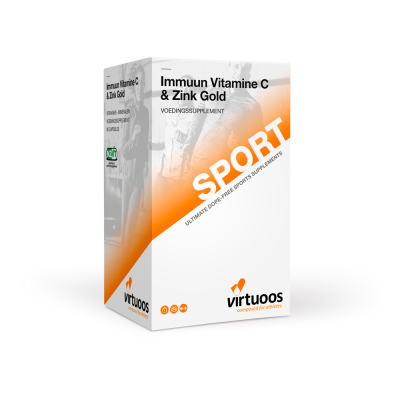
Regarding health and immune resilience specifically: especially when traveling to other continents and across time zones, we provide support for the immune system for instance, by using Immune Vitamin C & Zinc Gold. Long flights, jet lag, and a rigorous competition schedule place a significant strain on the body’s defenses, and that is precisely when you want to avoid falling ill.
3. What changes in the days leading up to a competition compared to a regular training week, and what role do timing and digestibility play in this?
In the days leading up to an important competition, quite a lot can change in terms of nutrition. During the summer and in regular training weeks, the focus is primarily on variety and healthy food choices: high-quality proteins, healthy fats (such as avocado, olive oil, and sardines), and complex, fiber-rich carbohydrates. These fibers not only provide good energy but are also essential for a healthy and balanced gut microbiome.
As an important race approaches, however, you want to consume fewer complex fibers. Fiber-rich foods and fats remain in the stomach and intestines for longer and simply take more time to digest. This is not an issue when you have plenty of time and can time your meals effectively. But consider this: when the moment comes to perform at your peak, you don’t want your body to still be busy digesting something like an avocado. During maximal exertion, blood flow is directed primarily to your muscles; any food remaining in your gastrointestinal tract can then lead to discomfort. Your glycogen stores—the carbohydrates stored in your muscles and liver—should be well-replenished, while your gastrointestinal tract should be given as much rest as possible. The available energy needs to be directed toward performance, not digestion.
In addition, competitions always involve a certain level of tension (something probably many athletes will recognize) which can also affect bowel function.
Bo van der Werff
Nutritionist at Team Novus
For this reason, it is wise to cut back on hard-to-digest foods during that week, making things a bit easier on your body. This ensures that your glycogen stores are optimally topped up for the moment you’ve been training for all this time, and hopefully prevents you from having to make constant trips to the restroom during your warm-up.
Timing is absolutely crucial here, and it’s something we actively ‘train’ with our athletes. “When should I eat a particular type of food, and why?” It’s important for athletes to understand the reasoning behind their own choices. That’s why you should always test your competition strategy during training first, never try something for the first time on the day of the event itself.
4. How do you determine which performance-enhancing supplements are relevant for a speed skater?
That varies from one skater to another. A sprinter going all-out for 34–35 seconds (500 meters) or just over a minute (1000 meters) places very different demands on their body compared to a long-distance skater competing in the 3,000 or 5,000 meters. Personal preference and how well an individual tolerates a particular supplement also play a role. These are all factors I take into account when considering performance supplements.
Furthermore, we only work with supplements backed by strong scientific evidence based products that have been tested for banned substances (for instance, through the NZVT certification). We also make it a rule to always test a supplement during training first; we never introduce one for the first time during a competition.
For which types of physical exertion can these performance supplements play a role, and how do you implement them?
Beetroot shots (nitrate) can be particularly beneficial for activities that combine a high aerobic contribution with high intensity for example, the 1000, 1500, and 3000-meter events. Through its conversion into nitrite and subsequently nitric oxide (NO), nitrate can influence the efficiency of oxygen utilization and muscle contraction. This can result in a lower oxygen cost for a given level of exertion. However, these effects do not manifest in every athlete or every situation; therefore, it is essential to test them individually during training and tailor their use to the specific athlete.
Additionally, creatine is widely used by sprinters. It replenishes the stores of creatine phosphate in the muscles, which serves as the most rapid energy source for short, explosive efforts lasting less than 30 seconds. This is especially relevant for activities lasting only a few seconds, as well as for repeated high-intensity efforts. Furthermore, when combined with strength training, creatine can contribute to greater gains in strength and muscle mass. For a speed skating sprinter, the potential advantage therefore lies primarily in the ability to generate and repeat high-intensity efforts, as well as in the overall quality of their strength and sprint training.
5. Team Novus has undergone several changes recently. How do you view the team’s composition heading into the new season? What do these changes mean for you as a nutritionist and for how you support the athletes?
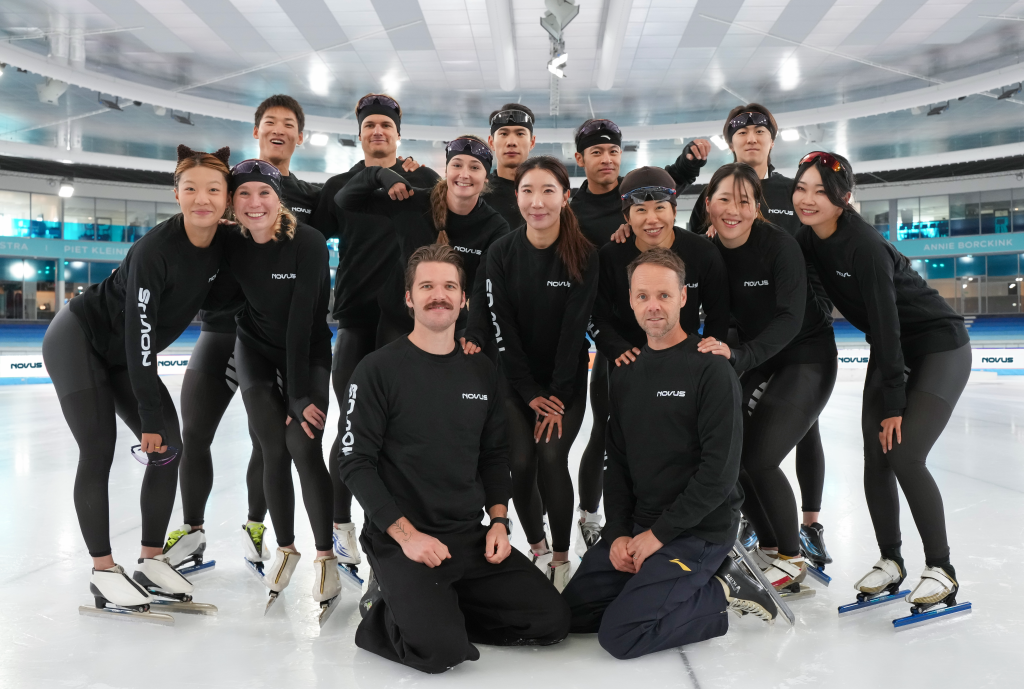
A lot has indeed changed within Team Novus. We have merged with Johan de Wit’s team, which means a large portion of the team now consists of Asian skaters. I think that’s an incredibly exciting step, and it’s awesome to be a part of it!
For me, it’s also a great challenge: I have to take into account different cultures, dietary habits, and tastes. At the same time, I’m learning a lot myself.
Bo van der Werff
Nutritionist at Team Novus
For instance, I’ve already received several nutritious Asian recipes from one of the skaters, who always cooks at home using vegetables from her own garden.
That’s also where the challenge lies for me. Dietary patterns in Asia are very different from those in the Netherlands, and a sudden switch to European food can, for example, lead to digestive issues. The trick is to minimize this as much as possible by incorporating familiar products and dishes wherever we can, and providing step-by-step guidance where necessary.
6. You have an international competition schedule that involves a great deal of travel and training in various locations. What challenges does this present in terms of nutrition and recovery?
This actually ties in well with what I mentioned earlier. We continuously monitor how the riders are doing—even when they are in Europe using tools such as microbiome testing. In this way, we strive to strike the right balance and tailor nutrition as effectively as possible to each individual athlete and their specific situation.
Ultimately, the goal is for athletes to gain an increasingly better understanding of what works for them: which nutrition to use and when—for instance, while traveling, in preparation for a World Cup, European Championship, or World Championship, or during a dedicated training period—as well as which foods they should avoid because they cause them issues. While expert guidance is crucial, fostering this kind of self-reliance ensures that an athlete can continue to make the right choices even when they are not under direct supervision.
How do you ensure that the skaters can continue to follow their nutritional strategy while on the road, and arrive at the starting line optimally prepared?
We do this by selecting food products that, based on the various tests we conduct, are known to be well-tolerated and easily digested. In this, I work closely with my colleague Johan Jongsma, who specializes in this area. Together, we provide recommendations tailored to the individual needs of each skater even while they are traveling.
Furthermore, during the summer and longer training periods, we focus on building the strongest possible gut microbiome. This enhances their nutritional and digestive tolerance, ensuring that the skaters remain as well-prepared and resilient as possible, even when they are on the move.
7. Elite athletes often follow set routines surrounding their training and competitions. What does a typical day of nutrition look like for a Team Novus speed skater from breakfast through to post-training recovery? And which Virtuoos products play a role in this?
The precise amounts of carbohydrates, proteins, and fats vary from athlete to athlete, depending on factors such as training load and individual requirements. To provide an idea, an average training day for a Team Novus sprinter looks roughly like this:
Breakfast (08:00):
Oatmeal with banana and blueberries, raw honey, cacao nibs, and optionally some flaxseed and shredded coconut. Depending on their needs, one or two boiled eggs with Celtic sea salt may also be added.
Supplementation: Creatine
Speed skating session (09:30–11:00):
A banana or some dried dates during the ice-resurfacing break to effectively replenish carbohydrate stores mid-session.
Lunch (12:30):
Quinoa with sweet potato, various vegetables, extra virgin olive oil, organic chicken, and perhaps some cheese.
Two slices of sourdough bread topped with avocado, some kimchi, a boiled egg, and a glass of (raw) kefir.
Mid-afternoon snack (14:30):
A peach and a handful of nuts.
Interval training (16:00–17:30):
Possibly some carbohydrates added to their water bottle, along with a few pieces of dried mango.
Dinner (18:30):
Curry with wild rice, chicken, and vegetables.
In-between snack (20:00):
A piece of dark chocolate
Pre-sleep snack (21:30):
A bowl of quark (curd cheese) with kiwi and shredded coconut
Supplements: Iron Complex Gold and Immune Vitamin C & Zinc Gold.
Just like the nutritional plan, the supplements are tailored to the individual athlete based on their specific needs, training load, and any potential deficiencies or areas that require extra attention.
8. Many young skating talents look up to the skaters currently performing at national and international levels. You also started at a young age; what advice would you have given your younger self advice that might also be valuable for today’s young talents?
My most important piece of advice for young talents would be: don’t focus too much on what you need to restrict; instead, focus on what your body actually needs. View nutrition as fuel—an essential component of your development as an athlete. Your body is your most important instrument. Take good care of it, provide it with the right nutrients, and don’t be afraid to eat enough.
Here are a few more tips I wish I could have given my younger self:
- Eat regularly and consume enough, including around your training sessions. Skipping breakfast or heading to the ice rink without sufficient fuel can compromise the quality of your training and your recovery.
- Don’t compare your body to others. Everyone has a different build, and a lower body weight does not automatically mean you will perform faster or better.
- Ensure your foundation is solid before you start looking into supplements. Especially at a young age, you can achieve a great deal simply through a sufficient and varied diet.
- Are you experiencing a lot of stress or feelings of guilt regarding food? Talk about it with your parents, your coach, or a (sports) dietitian. The sooner you bring it up, the better.